Home › Speed Bumps, Curbs, and Asphalt Accessories
Control traffic and improve safety on your property with professional speed bump installation in Spokane, WA. We install asphalt speed humps, curbs, wheel stops, and other parking lot accessories. Our team designs layouts that calm traffic while keeping access convenient for customers and residents.
Precision Asphalt Spokane provides professional speed bump installation throughout Spokane, WA, Washington and the surrounding area. Our licensed, insured crew delivers safe, clean, on-time work with a free estimate before anything begins. Call or request your free quote.
Speed bump installation and asphalt accessories for Spokane properties
Speed bump installation, curbing, and other asphalt accessories are some of the most effective tools you can use to slow traffic, guide vehicles, and protect pedestrians on your property. At Precision Asphalt Spokane, we focus on solutions that work specifically for Spokane and Spokane Valley traffic patterns, winter weather, and typical parking lot layouts.
We work with HOAs, apartment complexes, schools, churches, and commercial property owners who need drivers to slow down without creating drainage problems or snowplow headaches. Every project starts with a short site visit where we walk your lot, look at traffic flow, talk about the problem areas, and then suggest a mix of speed bumps, asphalt curbs, wheel stops, and signage that fits your site instead of using a one-size-fits-all layout.
Because Spokane gets freeze-thaw cycles, plowing, and sand through the winter, we design speed bumps and curbs for durability and for visibility in low light and snow. Our team lives and works here, so we know how a speed bump that looks fine in August can become a nuisance in January if it is placed or built wrong.
How we install asphalt speed bumps step by step
Proper speed bump installation is more than just putting asphalt across the lane. Our process is structured so the bump slows traffic, drains correctly, and survives winters.
1. Layout and marking: We identify exact locations based on sight lines, crosswalks, and drive lanes. We maintain spacing so drivers have time to react and slow before crosswalks or entrances. We mark edges and centerlines with paint so everyone can visualize the final result.
2. Saw cutting and surface prep: For asphalt speed bumps, we saw cut the existing pavement edges where needed to create clean joints. We grind or clean the surface so the new asphalt bonds tightly. Any oil spots are treated so they do not cause a delamination line later.
3. Building the bump: We place hot mix asphalt in lifts and hand shape the profile to the agreed height and width. Typical residential and low speed commercial bumps are 2.5 to 3 inches high. Emergency access routes may use slightly lower profiles. We taper the approaches longer in areas where delivery trucks, school buses, or fire trucks are expected so they can cross without damage.
4. Compaction: We compact with vibratory plate tampers and small rollers to achieve a dense, smooth surface. On older or cracked lots, we pay special attention to tying into the existing asphalt so there is no abrupt seam that can start a crack later.
5. Striping and reflectivity: After curing, we stripe the bump with high visibility traffic paint. In shaded or busy locations, we often recommend thermoplastic striping and reflectors for night visibility.
6. Final walk-through: We walk the site with you, check transitions, and confirm heights using a straight edge and measurements so the bump matches expectations and local practices.
Design choices for speed bumps, humps, and parking lot curbs
Not every traffic control device should be a tall, sharp bump. Precision Asphalt Spokane can help you pick the right type and layout for what you want drivers to do.
Speed bumps (shorter length, steeper profile) are suited for small parking lots and private drives where speeds should be kept under about 10 to 15 mph. Speed humps (longer, gentler arcs) are better for longer lanes, private roads, or fire routes where you need to slow cars without jolting larger vehicles.
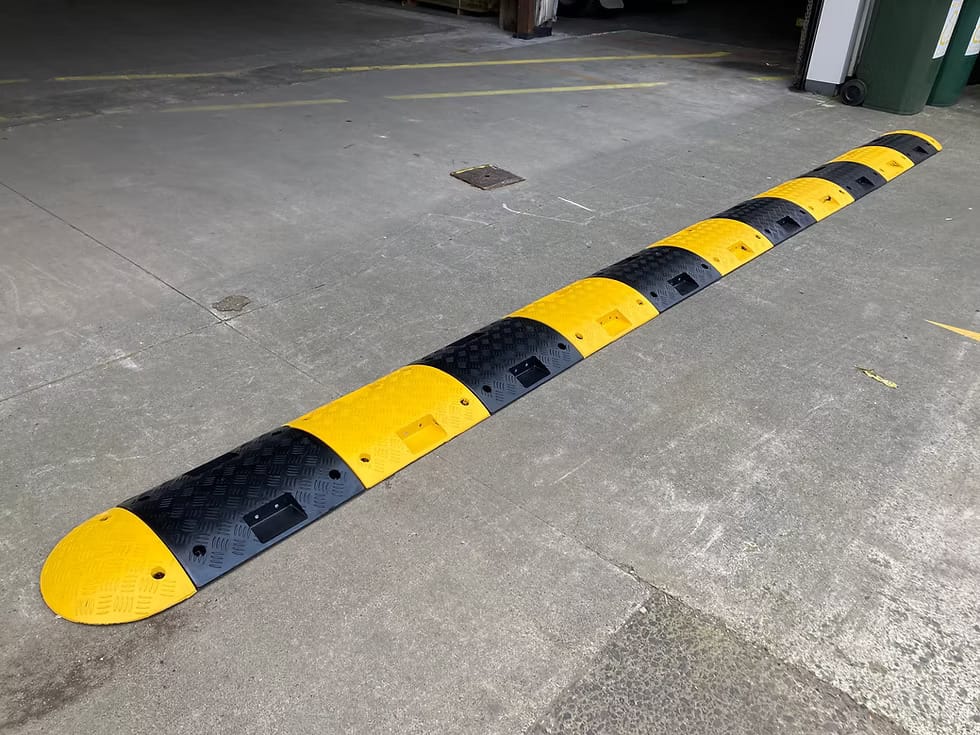
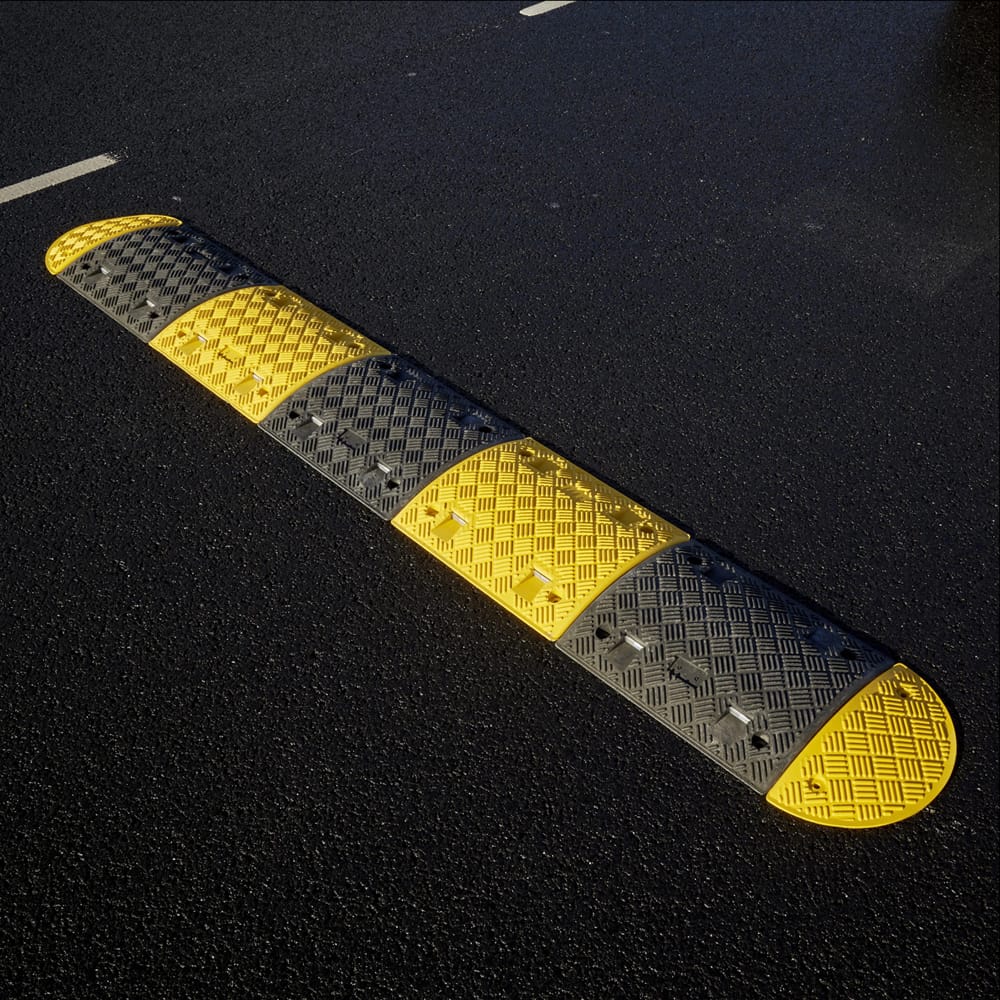
Material options include hot mix asphalt built in place, preformed recycled rubber or plastic units that bolt into the pavement, and concrete for permanent curbs and islands. Asphalt is more seamless and plow friendly. Rubber units are removable and can be reconfigured if you plan site changes in the next few years.
Curbs can be straight barrier curbs, rolled curbs, or formed concrete islands that hold landscaping and define drive aisles. In Spokane, we often recommend heavier duty curbs for areas that see snow storage or plow contact. We also look at where water runs during spring melt so new curbs do not trap water in front of entrances or cause ice sheets.
For accessories, we install wheel stops, bollards, pavement reflectors, and surface drainage inlets around these features. The right combination can prevent vehicles from bumping buildings, protect pedestrians at building entries, and keep stormwater flowing even when there is packed snow around the curbing.
What affects the cost of speed bump installation in Spokane
Pricing for speed bump installation, curbs, and asphalt accessories depends on a few concrete factors you can see on site.
Quantity and layout: More bumps and curbs usually mean a better price per unit, but complex layouts with islands, crosswalks, and drainage adjustments require more labor per piece. A single bump on a tight residential drive with tricky access can sometimes cost more per foot than several bumps in an open commercial lot.
Existing pavement condition: If your asphalt is cracked, alligatored, or has base problems, we may need to repair or reinforce those areas before tying in a new bump or curb. Installing on failing pavement will create early cracking on both sides of the bump. We will point out any areas where patching or skin lifting will actually save money over time.
Material and visibility upgrades: Rubber or plastic modular bumps cost more in materials but can be reused. Thermoplastic striping, reflective markers, and high build paint add to the upfront price but extend the time between restripes. Many property managers here choose upgraded striping on steeper driveways or shaded lanes where snow and ice obscure markings.
Season and timing: In Spokane, asphalt work is most efficient from late spring through early fall. Work done in cooler shoulder seasons may require extra heating and handling to achieve proper compaction and bonding. Night or off hour work, common for busy retail or medical lots, also adds to labor cost but can be worth it to avoid disrupting traffic and business.
During our estimate, Precision Asphalt Spokane breaks out these factors so you understand what each decision does to both cost and longevity.
Working around Spokane weather, plows, and drainage
Spokane’s winters play a big role in how we design and install speed bumps and curbs. If these features catch plow blades or trap water, they will not last.
We coordinate bump height and shape with how your lot is typically plowed. On lots using pickup plows, we build longer tapers and slightly rounded crowns so the cutting edge rides over instead of biting into the asphalt. Where large municipal style plows operate, we try to place bumps and curbs outside their primary push lanes, often closer to building fronts or interior aisles.
Drainage is critical. We avoid running a solid bump across the lowest point in a drive without a plan for water. In some cases we cut a shallow, reinforced channel through the bump or adjust the bump location slightly uphill so water continues to reach catch basins. On curbing projects, we plan regular curb cuts or low points so meltwater does not pond against structures and freeze.
Timing matters. We prefer to install new asphalt features in warm, dry weather for proper compaction and bond. If your schedule requires work near the beginning or end of the season, we will discuss how temperature and ground moisture may affect scheduling and what that means for curing time and striping.
Common problems we solve with curbs and asphalt accessories
Speed bumps are only one piece of making a lot safer and easier to navigate. Precision Asphalt Spokane often pairs bumps with other asphalt accessories to solve specific local issues.
Cut-through traffic: In neighborhoods near busy arterials like Division or Sprague, HOAs sometimes struggle with drivers using private lanes as shortcuts. A combination of strategically placed speed humps, narrowed entries using curbs, and clear signage can discourage these movements without blocking residents.
Pedestrian safety near entrances: At schools, churches, and clinics, we often add a raised crosswalk or a speed table at key doorways, along with painted crosswalks, stop bars, and curb extensions. This shortens the crossing distance so pedestrians are in the lane for less time.
Parking lot disorganization: Wheel stops, curbed islands, and directional arrows help prevent drivers from cutting across rows or parking where they block visibility. In Spokane’s winter months, painted lines alone are often buried by snow. Concrete curbs and wheel stops provide a physical guide even when markings are covered.
Building protection: Bollards, curbs, and reinforced wheel stops can prevent vehicles from creeping into sidewalks, loading docks, or storefronts, especially in sloped lots where cars can roll if not properly parked.
All of these elements are designed to work together with your speed bumps so that drivers understand exactly where to go, how fast to travel, and where to stop.
What to expect when you hire Precision Asphalt Spokane
Our goal is to make the process straightforward while giving you control over the final layout and appearance.
1. Site visit and discussion: We meet you on site, walk the pavement, and talk about where people speed, where near misses happen, and how the lot is used in winter versus summer.
2. Layout plan and estimate: We sketch proposed bump and curb locations, talk through material options, and provide a written estimate that explains quantities, materials, and any prep or repair work recommended.
3. Scheduling: We work around your operating hours, heavy traffic periods, and any planned events. For apartments or offices, we can stage work so only part of the lot is blocked at a time.
4. Installation day: Our crew sets up cones and signs, completes saw cuts and prep, installs bumps, curbs, or accessories, then finishes with striping as conditions allow. We keep you updated if weather forces any adjustments.
5. Aftercare guidance: We explain when you can reopen to traffic, how to handle first season snow plowing, and what kind of inspections or restriping schedule makes sense for your property.
Because we are local, you can call Precision Asphalt Spokane back if you have questions after the work is done or if you want to add additional bumps, curbing, or accessories as your property changes.